Living in another country reshapes more than daily routines. It changes how people think, speak, and often how they experience themselves. For many adults living in Porto, English remains the language in which emotions, memories, and internal conflicts are most clearly understood. Psychotherapy in English in Porto is therefore not only about convenience, but about psychological precision. This work is intended for adults who are navigating loss, illness, relocation, or identity shifts, and who want to reflect on these experiences in the language that carries their inner life most accurately.
Why language matters in psychotherapy
Psychotherapy depends on nuance. Subtle differences in phrasing, tone, and association often carry more psychological weight than explicit content. Language does not merely describe experience; it shapes how emotions are processed, remembered, and regulated.
Research in psycholinguistics and clinical psychology consistently shows that emotional material is processed differently in a second language. Working in a non-dominant language can increase cognitive load, reduce emotional immediacy, and create subtle distancing from affect. While this can be useful in certain contexts, it may also limit depth when therapy involves grief, fear, ambivalence, or meaning-making.
Importantly, conversational fluency is not the same as therapeutic fluency. Someone may speak English confidently in professional settings while still finding it easier to access vulnerability, memory, or emotional complexity in that language. In psychotherapy, this distinction matters. The aim is not linguistic correctness, but the ability to stay with experience without translating it.
For many internationally mobile adults, English is the language in which adult identity, relationships, and major life experiences unfolded. Working in that language allows attention to remain on psychological work rather than on managing expression.
Who seeks psychotherapy in English in Porto
This form of therapy naturally tends to attract a specific group of people.
Many are expatriates or international professionals living in Porto who conduct much of their daily and relational life in English. Others moved later in life and never fully transferred their emotional world into Portuguese, even after years of residence.
Often, these are individuals who are externally functional — working, caring for others, maintaining responsibilities — while feeling internally unsettled. They may be integrating experiences such as bereavement, illness, caregiving, migration, or prolonged uncertainty that have altered their sense of self.
This work is usually not sought for quick symptom relief. It is sought by people who want to understand what has changed, how it has shaped them, and how to live coherently in its aftermath.
What this kind of therapy focuses on
Psychotherapy in English in Porto, as offered here, is depth-oriented and meaning-focused. The work centres on integration rather than optimisation, and on understanding rather than reassurance.
Therapy often involves making sense of how life disruptions have reshaped identity, values, and relationships. It allows space for grief, ambiguity, and complexity without rushing toward resolution. Rather than treating experience as something to fix, therapy becomes a place to think carefully about what has been carried forward, what no longer fits, and what still requires attention.
This is ongoing, reflective work. It prioritises coherence over performance and understanding over techniques.
The therapeutic setting
Psychotherapy does not happen in abstraction. The physical setting matters.
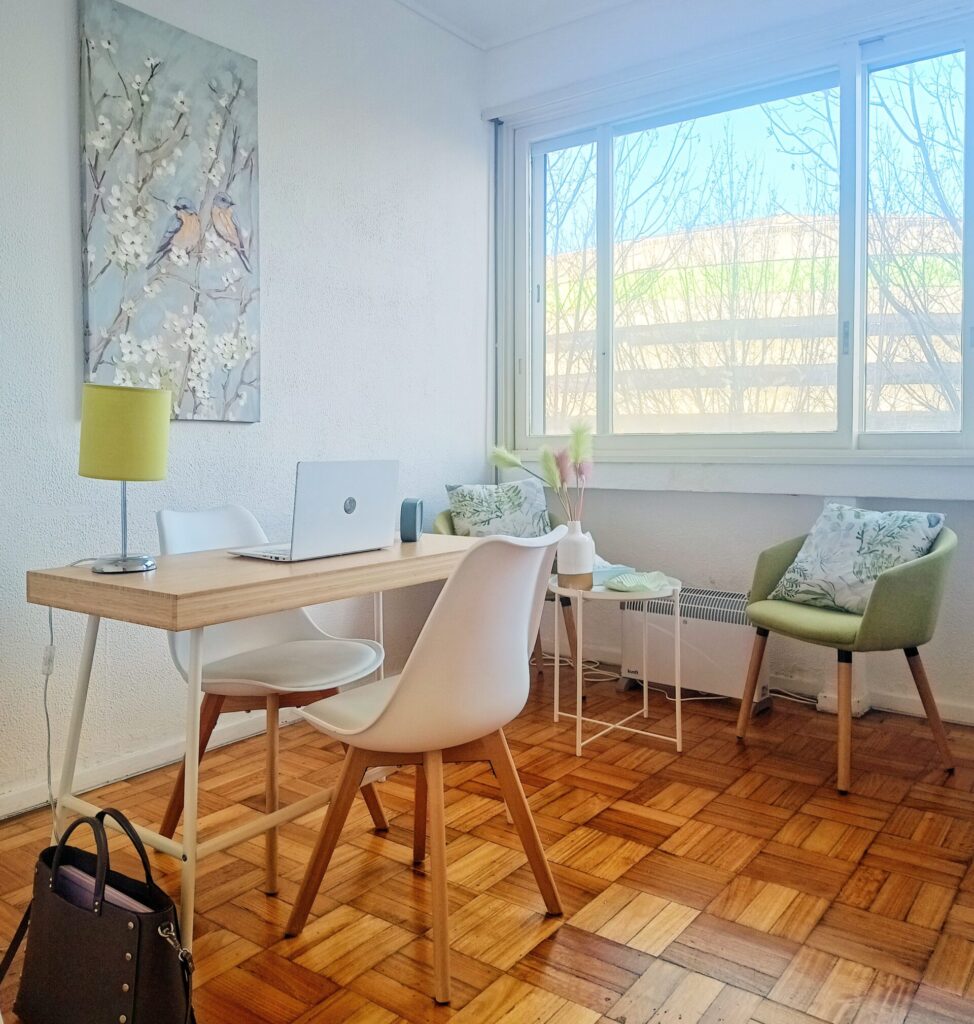
Research in psychotherapy and environmental psychology has shown that therapeutic environments influence emotional regulation, attention, and a person’s capacity for reflective work — particularly in longer-term therapy.
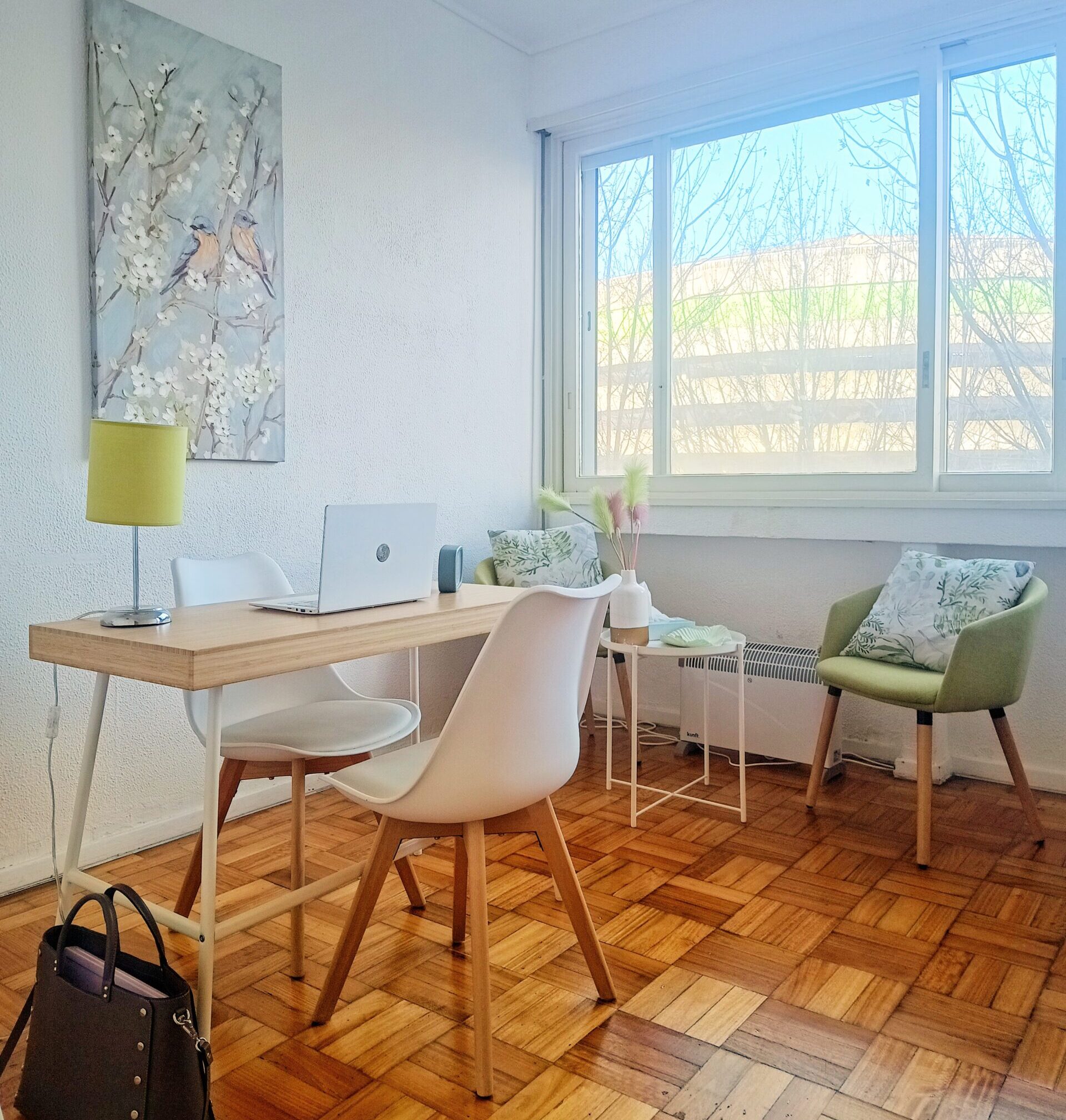
My office in central Porto is designed to be quiet, contained, and intentionally uncomplicated. Natural light, simple furniture, and a clear spatial structure create an environment that supports reflection rather than distraction. The aim is not comfort as performance, but steadiness — a space where attention can rest and difficult material can be approached without urgency.
You can read more about my professional background and clinical orientation here.
The consultation room is located in a shared professional building near Trindade. For those who want practical information about the location itself, the building can be found here.
I occasionally share reflections related to my work and glimpses of the professional environment on Instagram.
This is not a window into clients or therapy sessions, but a way of communicating tone and values: privacy, clarity, and psychological depth.
Whether sessions take place in person or online, the same principles apply — containment, continuity, and sustained attention.
Practical details
Psychotherapy is offered in English, both online and in person in central Porto, near Trindade. Sessions typically last 50 minutes and are scheduled on a regular basis.
This work is intended for adults and is not crisis intervention. Individuals experiencing acute psychiatric emergencies or requiring immediate support are best served by emergency or specialised services.
Practical information about fees and session structure can be found here.
How to know if this is the right next step
Psychotherapy may be helpful if you find yourself returning to the same questions without clear answers, feeling changed by experiences you have not fully integrated, or sensing that something in your life no longer aligns internally despite external stability.
It may not be the right fit if you are looking primarily for rapid techniques, behavioural coaching, or short-term crisis management. This work requires tolerance for reflection, uncertainty, and depth.
Choosing psychotherapy is less about urgency and more about readiness — a willingness to look carefully at what has shaped you and to give it sustained attention.
If you’re considering psychotherapy in English in Porto, you can read more about how I work here.