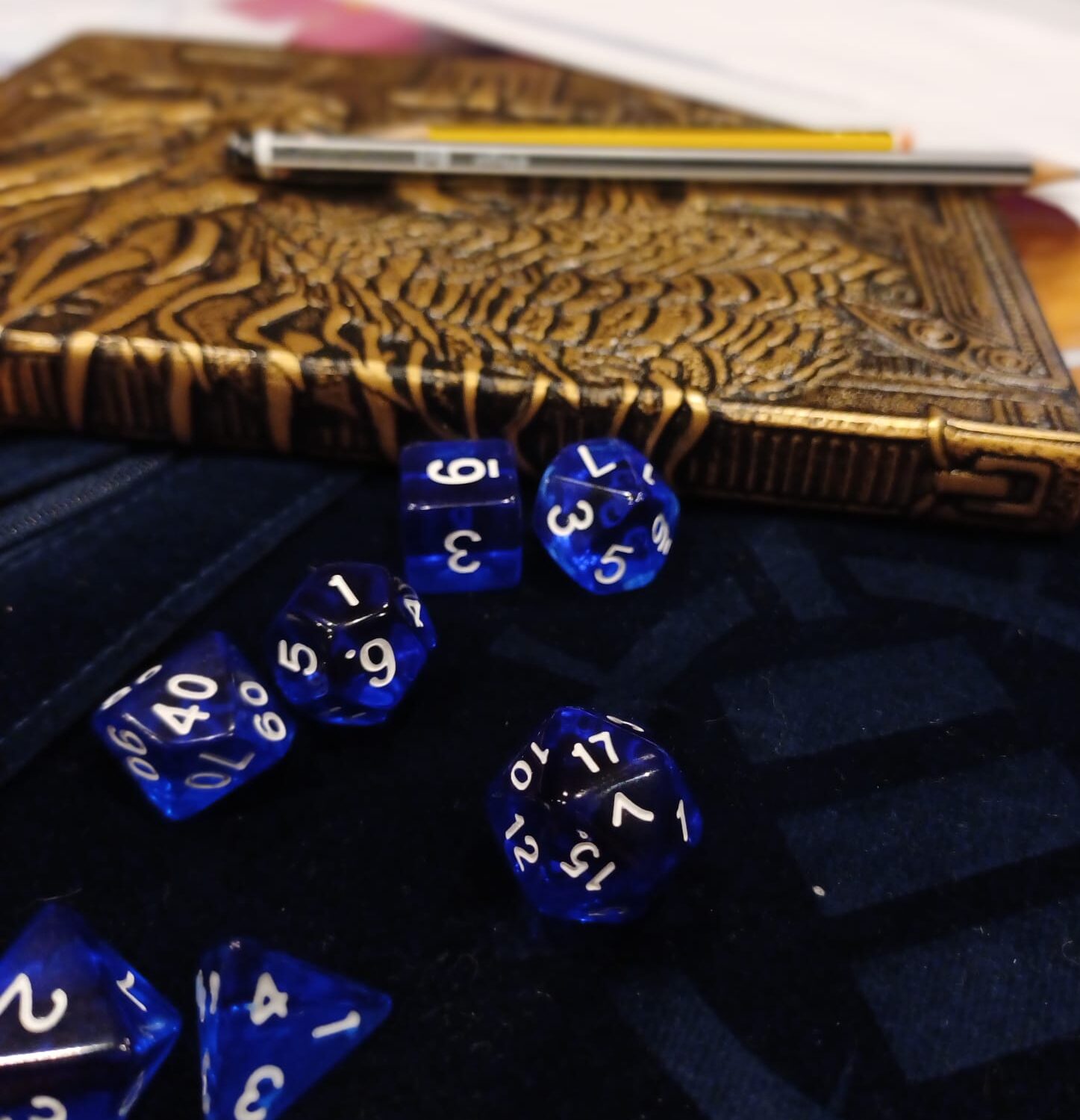
Normally every role-playing game begins with character creation. Players can pick and choose who they will be when embarking on their adventure. They often assume they are inventing something new: a class, a backstory, a set of traits chosen for entertainment.
In practice, very little starts from nothing.
Even when players deliberately try to be “someone completely different,” familiar patterns tend to surface. Patterns revolving around responsibility, avoidance, loyalty, self-sacrifice, skepticism, longing. These qualities appear not because the game demands them, but because they are already there.
Role-playing does not necessarily create personality. But it can reveal it.
The Character Sheet Is Not Blank
Traits, flaws, bonds, and fears are not selected as randomly as one might want to believe. They are drawn from emotional material that player already understands – even if only implicitly.
Someone who consistently chooses characters burdened with responsibility often knows that feeling well. Or someone who creates a character without any bonds or commitments – to embody the dream of an untethered life. Someone drawn to morally ambiguous paths may be exploring conflicts they rarely articulate openly. A character who avoids attachment, travels alone, or resists authority is rarely an accident. And so on and so forth.
This does not mean players are “playing themselves.” It means that when given symbolic distance, people often express aspects of themselves more honestly than they would in real life context.
Sometimes it is easier to express your needs and wants while speaking as a tiefling bard than as yourself.
Distance Makes Honesty Possible
From a psychological perspective, role-playing introduces a fascinating setting: a safe distance from consequence. While choices matter in the story, they are not permanently binding in real life.
That distance invites experimentation, so that someone can try being braver, harsher, more loyal, more selfish, more expressive – and see what it feels like.
What resonates.
What feels uncomfortable.
And what feels strangely familiar.
In clinical terms, this is not escapism. It is exploration. The game provides a contained environment where emotional styles, attachment styles, conflict navigation, and social roles can all be tested without immediate real-world cost. And it’s precisely that, that containment, that creates a unique setting ideal for self-exploration,
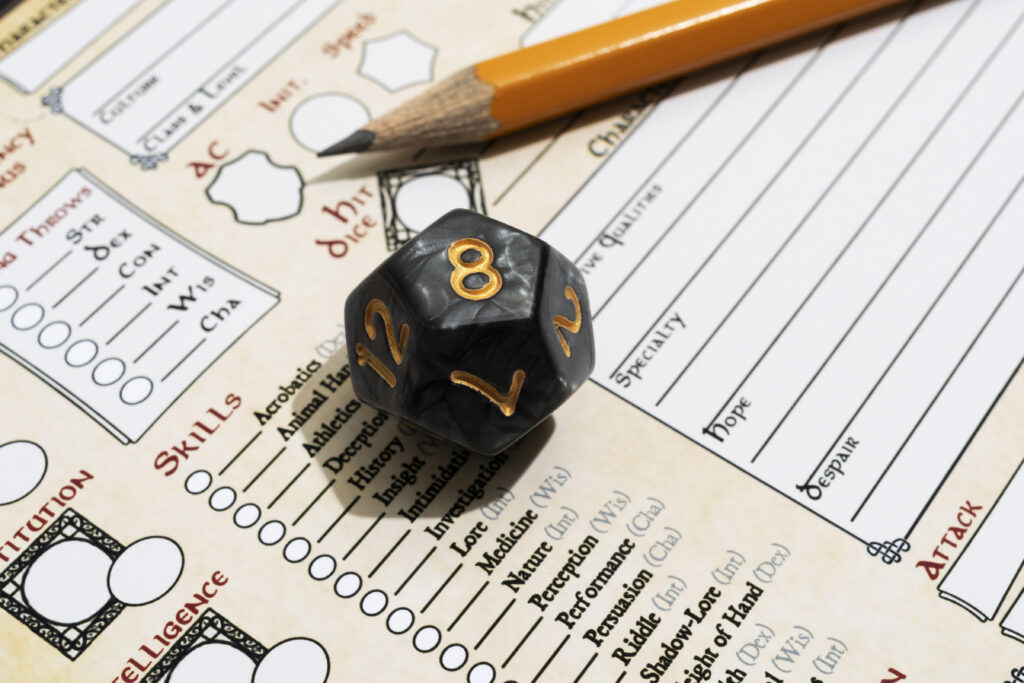
Patterns, Not Random Choices
Looking at RPGs from a psychological perspective, the focus is never a single choice or decision, but the pattern that emerges over time.
How does a player handle conflict? Do they confront directly, negotiate, avoid, or delegate?
How do they relate to companions? Do they rescue, protect, keep emotional distance, or prefer self-reliance?
How do they respond to irreversible choices? With guilt, justification, regret, or acceptance?
These are not judgments of your personality, but rather a reflection of what might’ve been within you all along. Over time, games like D&D or narrative RPGs create repeated moments where values, boundaries, and tolerances are revealed gradually. Often, players recognize these patterns only after the fact — if they pause to reflect at all.
Agency, Stakes, and Fear
One of the reasons why role-playing can feel so emotionally engaging is that it restores a sense of agency. Choices have weight. Actions have consequences. Something is at stake.
Interestingly, this can mirror what happens psychologically after periods of numbness or shutdown. When stakes return, fear often follows. Not because something is wrong, but because the sense of attachment has returned.
In games, this can show up as hesitation before difficult decisions. In life, it can show up as anxiety when meaning re-enters the picture.
Both reflect the same underlying shift: caring again.
Leadership, Support, and Timing
Another fascinating lesson that RPGs and ttRPGs can teach us is embracing the role. And it often pushes you out of your comfort zone.
Sometimes it is time for a barbarian’s rage — to act decisively, to protect, to set limits.
Sometimes it is time for bardic inspiration — to support, to step back, to let others shine.
Healthy functioning, in games and in life, is rarely about staying in one role. That’s the beauty and the intricacy of this experience. It is about knowing when (and how) to navigate between them, preserving your identity and yet being able to adapt.
People who struggle are often not lacking strength or empathy, but stuck in a single mode (or role) long after it served its purpose.
Reflection Is Where Meaning Emerges
Role-playing games do not replace therapy. They are not therapeutic by design, they are entertaining. But I believe it is a powerful tool that allows players to explore themselves and reflect on what their in-game choices might reveal.
Questions like: What did I enjoy? What did I avoid? Where did I feel exhilarated? What made my stomach drop?
These questions are not necessarily about optimizing gameplay. But they can definitely offer insight into one’s patterns and preferences.
And that, ultimately, is where the real psychological work begins – not in performance or solutions, but in introspection and attention to the emotional context.
Sometimes a fictional world offers just enough distance to let us see ourselves in more detail.